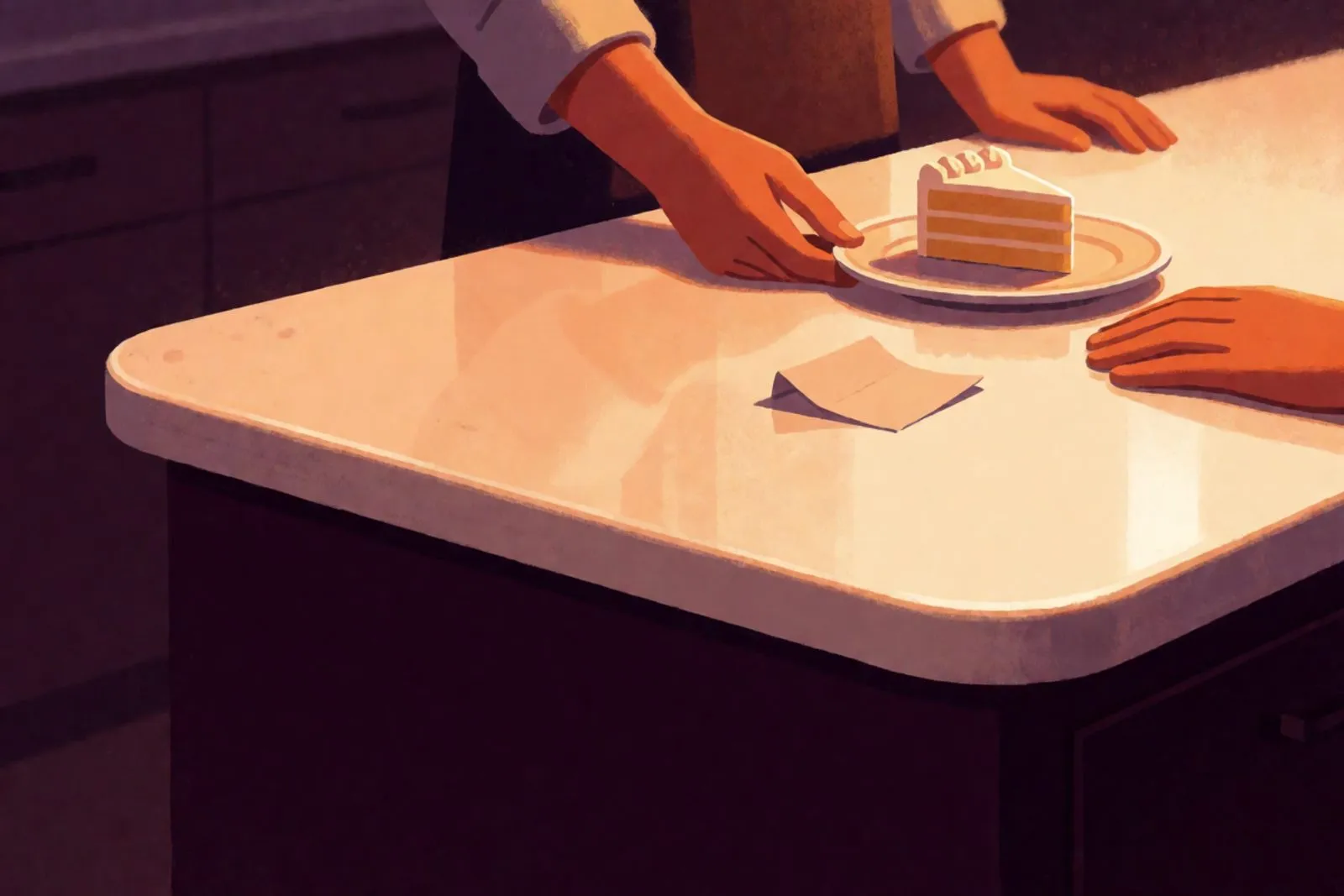
How you make up: a test for couples about what comes after the fight
How You Make Up is about the part after the argument: an apology, a gesture, some space, an explanation, or simple warmth. You both answer on one phone and guess each other’s style. Then comes a short read about how the two of you find your way back to each other.
15 questions · about 2 min each
What’s in the test
- The quarrel is over but it still feels heavy. Your first move? Say sorry out loud, plainly · Bring someone close tea and the snack they love · Say calmly what upset me, and let it close · Come sit next to them without saying much
- You snapped at someone close this morning. Quietly fix something for them — a small peace offering · Let the day pass, then come back softly · Say sorry for the tone, without a speech · Talk it out so we both know where that came from
- An hour after the quarrel, what helps most? Take a bit of distance until it settles · Sit down and sort out what actually happened · Put a plain sorry out there right away · Get close again and stay there a while
- You've both cooled down. Now what? Talk through where it went wrong · Sit close until it feels normal again · Put on the thing they wanted to watch · Let the evening go by and start fresh
- Someone close is still upset with you. Hug them and hold on as long as it takes · Say the actual words: I'm sorry · Do the chore they hate most, no words · Give them room and check back later
- The dust settles and you see you were wrong. Say it out loud: I was wrong · Take some quiet first, then come back to it · Fix what I can and let that speak · Walk them through how I got it wrong
- What makes your apology feel real? Saying sorry without excuses · Explaining what you'll do differently · Showing it by making the day easier · Being close with them by the end of it
- The morning after a fight with someone close, you… Make their breakfast exactly how they like it · Ask if you can talk it through · Keep the morning easy and leave it till evening · Catch their eye and don't look away till they smile
- Someone close is sulking because of you. Leave a little something nice on their desk · Sit beside them until they thaw · Own it plainly, no build-up · Stay out of the way and come back when it lifts
- You said sorry, but the air is still tense. Give it a day — time does its part · I don't go to sleep until we've said goodnight · Say it again, slower, and mean it · Ask if we can finish what we left unsaid
- Making up usually starts with… My honest "I'm sorry" · A kind thing done without a word · A calm run-through of what happened · Us ending up at the same table again
- You want to fix it, but someone close isn't ready. Do a small kind thing anyway · Hold off, and come near when the air is lighter · Say it regardless: I'm sorry, no pressure · Send what I wanted to say and leave it with them
- A day has passed since the quarrel. Once the air clears, I come back as usual · Bring it up once, gently, and close it · I say my sorry properly and stop there · I squeeze their shoulder on my way past
- What actually ends a fight for you? When we finally understand each other · The moment it feels warm again · When one of us just does something kind · When enough time has gone by quietly
- Your best way to say "we're okay"? Extra gentle for the rest of the day · A clear, simple sorry · Doing the thing they'd been putting off · Just being normal again, no big deal
How to take it together
- 1. Sit down together with one phone. Take turns answering the “How You Make Up” questions. Answer for yourself, and don’t peek.
- 2. Before the results, each of you guesses: which type will your partner get? Pick it on screen, then see who was right.
- 3. Then comes a short read about the two of you: what each type is like, and what happens when these two types share a life.
The types, in short
Sorry Out Loud
You say the plain sorry first
When something goes wrong between you and someone close, the words come out of you: a plain "I'm sorry," with no excuse attached. You don't wait for the right moment or the perfect wording. Saying it out loud is how you put the weight down and hand the other person a way back in.
A Peace Offering
Care shows up as something small
Words feel thin to you while the air is still heavy, so you do something instead. Tea appears. The dishes are done before anyone gets to them. A snack lands beside someone with no comment attached. It isn't avoiding the subject and it isn't buying peace; it's care put into a form you trust.
Give It Time
It settles first, then you return
Heat doesn't help you think, and it doesn't help you be kind either, so you let the hours do part of the work. You're not disappearing and you're not shutting anyone out. You're waiting for the point where what you say comes out the way you actually mean it.
Clear the Air
You sort it out and close it
Until you know what actually happened, the thing stays open in your head all day. So you go back over it together: what you meant, what they heard, where the two came apart. Once it makes sense to both of you it's genuinely finished, and the day can go on.
Warm It Back
Closeness first, words later if needed
Talking can wait; the distance cannot. So you close it by being near: you drop onto the other end of the sofa, you stay in the same room, you lean in for a second. No speech, no plan, just proof that nothing's broken between you. The warmth says it, and words come later if they are needed.
Questions people ask
Why test making up and not fighting?
Because what you do after a fight often matters more than the fight itself. Two people can argue differently and still repair well, if they know how the other one does it.
What if I never feel like we’ve really made up?
That’s useful to find out. Your pair profile shows which kind of repair each of you needs, so you can ask for it directly.
Is it only for couples who fight a lot?
No. Any two people who share a life have some friction. The test is just as useful for quiet couples.